
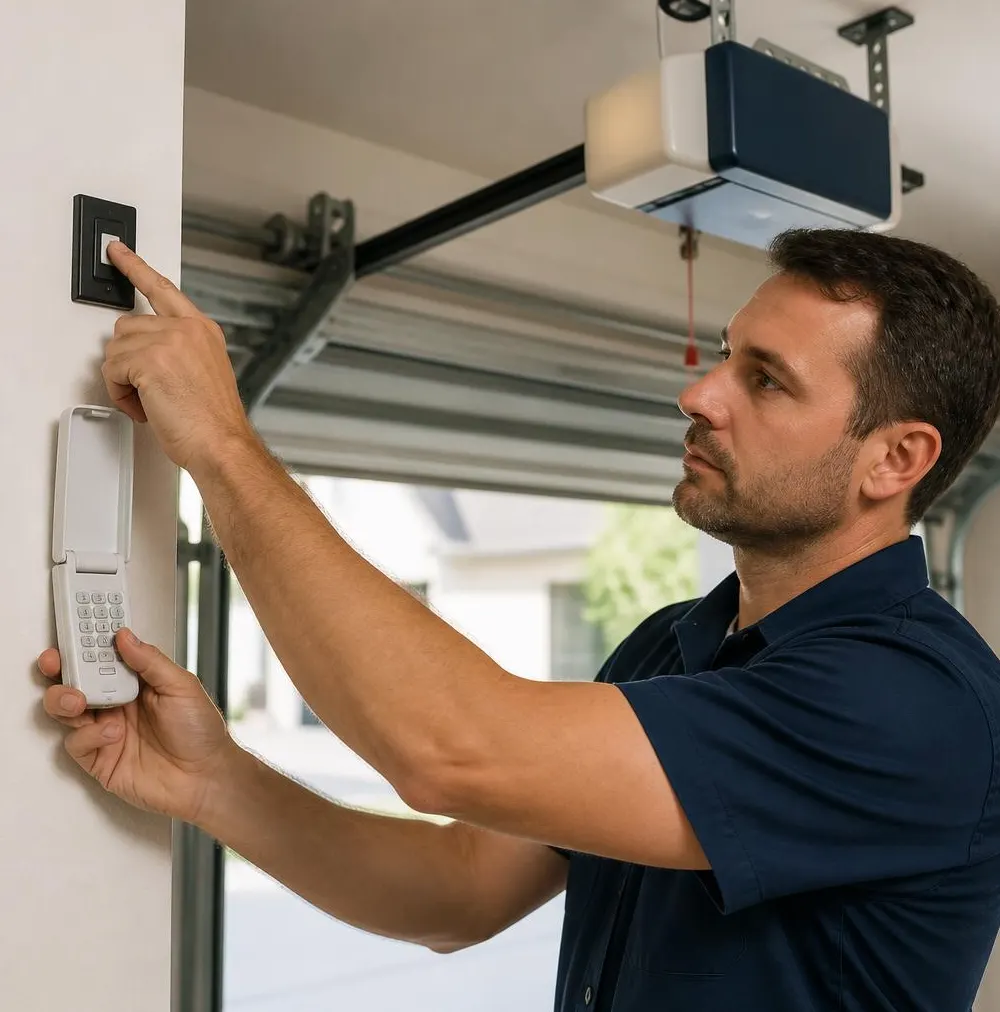
You're standing in the garage staring at the old door, which has started groaning on the way up, while your spouse has a tab open on their phone showing a door with little windows across the top that neither of you can agree on. Somewhere in that conversation someone says "wait, don't we need a permit for this?" and someone else says "it's a garage door, not an addition." Both of you are a little bit right.
Do You Actually Need a Permit?
It depends on what's changing, not just that something is changing. If you're swapping in a new door that's the same size and fits the existing opening, most townships treat that as a like-for-like replacement and don't require a permit. If you're widening the opening, changing the header, converting a single door to a double, or doing anything that touches the framing, that's a structural change and it almost always does require one.
The trade-off: pulling a permit takes time and a little paperwork, but skipping one when it's required can come back to bite you at resale, when an inspector or buyer's agent asks for documentation you don't have. Before you order anything, a quick call to your local building department settles it in five minutes. Save the argument for the window style.
What Your HOA Might Actually Control
If your neighborhood has a homeowners association, the covenants usually say something about garage doors even if nobody's ever mentioned it to you. Common restrictions:
- Approved colors (often a fixed palette, not "any color you like")
- Panel style — raised panel vs. flat, carriage-house look vs. traditional
- Window placement or whether windows are allowed at all
- Material — some associations are picky about steel vs. faux-wood composite
The fix here isn't complicated, it's just a step people skip because they're excited to order the door: pull your HOA packet, find the architectural or exterior modification section, and submit for approval before you buy. Associations can and do ask homeowners to redo work that wasn't approved first, and that's a far more expensive argument than the one you're having tonight.
Wind-Load Codes — Why This Actually Matters Here
This is the one that surprises people. A garage door isn't just a big panel that opens and closes — it's one of the largest openings in your home's exterior wall, and during a high-wind event it can act like a sail. If it fails, wind pressure can get inside the garage and push up on the roof structure from underneath, which is a much bigger problem than a dented door.
Given the spring storm and tornado season that comes through this part of Ohio, and the wide seasonal swings in general, wind-load rating isn't a box to check for looks — it's structural. A wind-rated door has reinforced panels, heavier end stiles, and often a beefed-up track and bracing system designed to hold up against higher wind pressures than a standard residential door.
What to ask your installer
- What wind-load rating does this door carry, and is that documented?
- Does the track and header reinforcement match that rating, or is it just the panel?
- If my permit requires wind-load certification paperwork, can you provide it?
Standard doors typically cost less upfront; wind-rated doors cost more (national ranges vary widely depending on size and material), but if your permit or insurance requires certification, that's not really optional — it's part of doing the install correctly.
When to Call Perrysville Garage Door
If you're at the point of comparing doors and neither of you is sure what's required, that's exactly when to call us before you order anything. Our Garage Door Installation service includes checking the opening, talking through wind-load needs for your situation, and making sure the door you pick is one we can actually install to code — not just one that looks good online. We also handle Garage Door Repair if the real issue tonight is just that groaning noise and a full replacement isn't needed yet.
Either way, you don't have to sort out permits, HOA rules, and wind ratings on your own kitchen table. Call Perrysville Garage Door and we'll walk the job with you — serving Perrysville, Loudonville, Ashland, Butler, Jeromesville, Lucas, Bellville, and Hayesville, OH.